The operating context
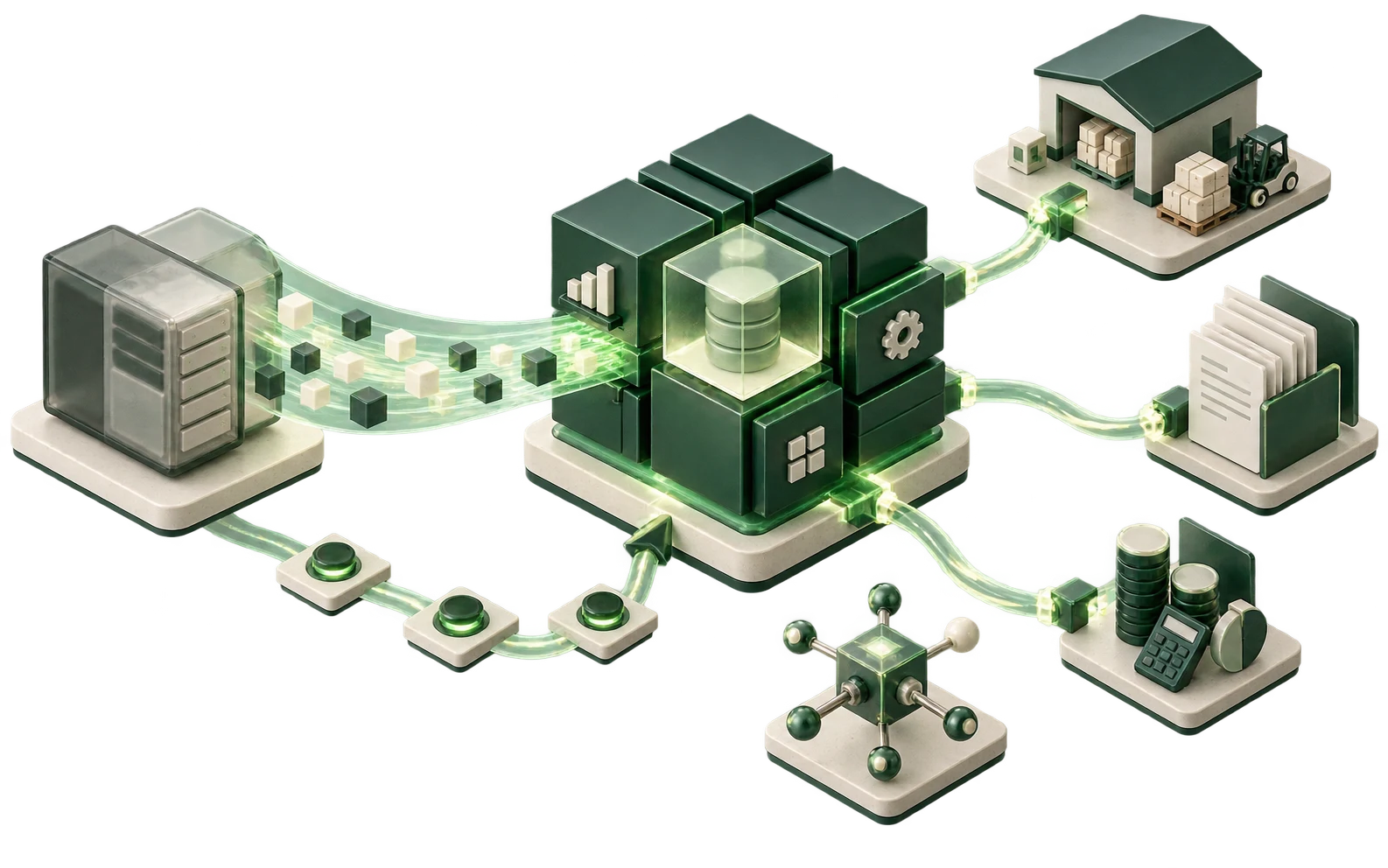
In automotive parts and services, quotations, orders, catalogues, purchasing, invoices, inventory and shipping form one operating system. Over time, however, these functions can grow across different applications and accumulate dependencies that are hard to see. Evolving the ERP therefore means changing daily work while protecting history and continuity.
The transition challenge
The programme needed to support the progressive retirement of a legacy system and its connection with specialist data sources and applications. The risk was not only technical: concentrating migration into one step would have made data, integration and process issues harder to separate. The transformation was therefore divided into work packages, milestones and validation points.
Data, processes and integrations
The analysis connected industry catalogues, accounting, e-invoicing, inventory and shipping. APIs and web services supporting communication across components were mapped alongside a migration path designed to preserve relevant information from the previous system. Management dashboards and ERP frameworks were assessed as parts of a roadmap rather than isolated answers.
Prototyping before expansion
For selected operating functions, including inventory and shipping, the project defined prototypes and foundations for later development. Distinguishing mature components, beta functions and future initiatives connected each release to concrete checks and avoided confusing the overall vision with the actual state of individual modules.
Project360 contribution and the voucher
Within a programme supported by an innovation advisory voucher, Project360 delivered project management, technical-functional analysis, specifications and integration design. It worked with the client’s teams and suppliers to align processes, technical constraints, migration and the release sequence. Delivery of individual components remains attributable to the parties involved according to their respective roles.
Transferable value
A business platform evolves more reliably when data, interfaces and processes move through controlled stages. The method transfers well to SMEs with layered systems: it makes modernisation easier to understand, reduces disruption risk and creates a shared direction across business and technology.