The AgriTech context
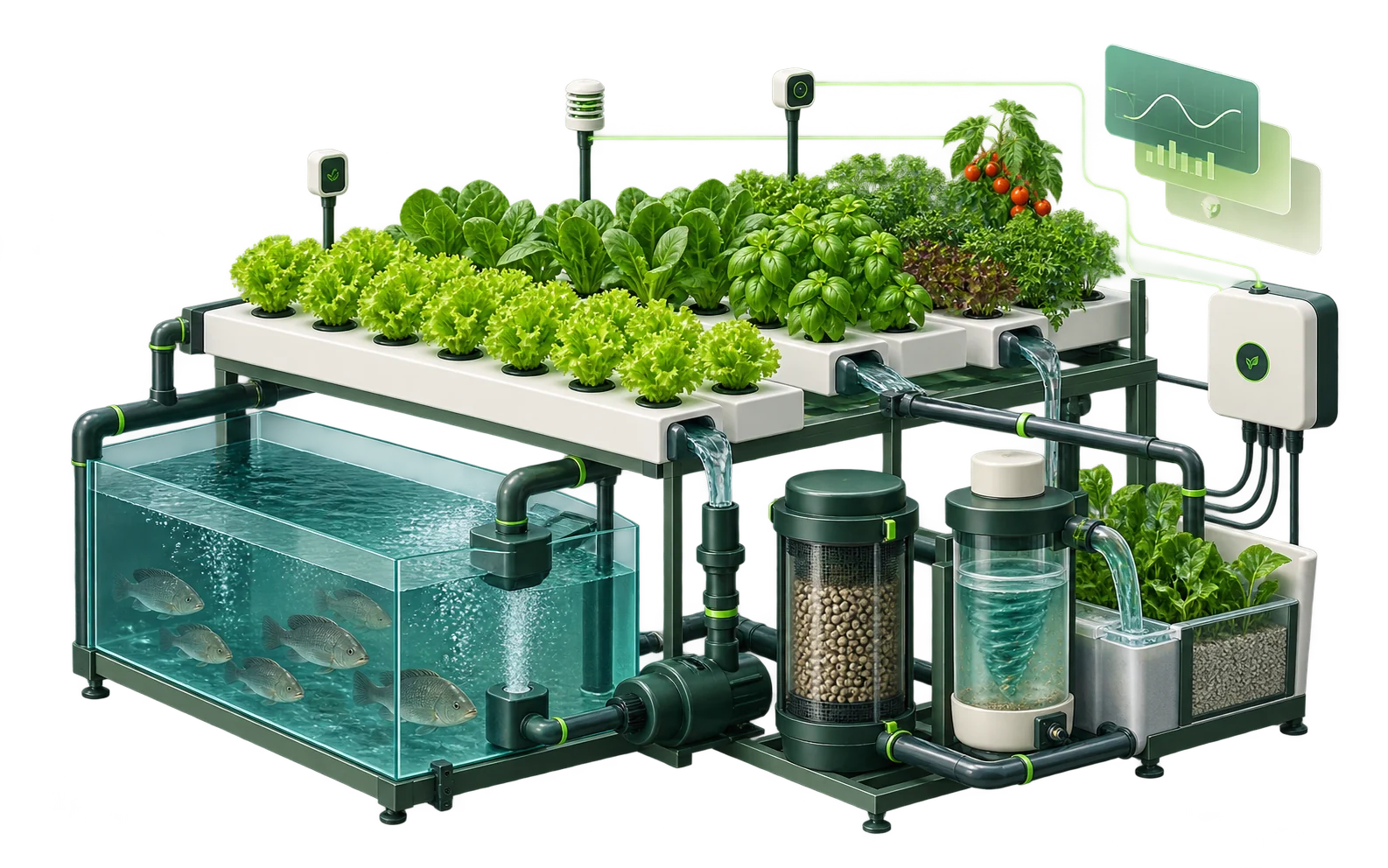
In a hydroponic or aquaponic system, the growing environment is part of the production process. Water, environmental conditions, recirculation cycles and crop response need coordinated observation. Technology can help, but sensing and automation create value only when connected to agronomic decisions and a sustainable business model.
The system challenge
The I/O Ponic concept connected monitoring, control and economic feasibility. The challenge was to define which parameters to observe, how data could inform operating rules and which assumptions required experimentation. Every technical choice affects management, maintenance and the potential to extend the system.
What was framed
The project outlined a precision-farming system for controlled cultivation, with environmental sensing, equipment control and a data platform as connected elements. The definition remains at concept and requirements level: the documented value lies in the model and validation path rather than in measured agronomic performance.
Considering these components together also makes interfaces between physical equipment, software and operating practice visible. That shared view is essential when different technical and agronomic specialists contribute to the same experiment.
The validation loop
The roadmap connects observation, control and review. Sensors collect useful indicators; control logic acts on equipment; the platform makes patterns and anomalies visible; agronomic expertise assesses whether the rules create appropriate conditions. This loop supports progressive refinement of requirements and priorities before scaling.
Project360 contribution
Project360 delivered financial planning and contributed to the precision-farming system definition. The work connected concept architecture, economic assumptions and the project path, aligning the technology perspective with the agronomic expertise required.
Transferable value
The case shows how to make an AgriTech idea assessable: objectives, data, automation and the economic model need to converge in one roadmap. Separating assumptions from results enables progressive decisions on sustainability, maintenance and scalability while keeping what still needs to be tested clear.
Funding and project development
The Friuli Venezia Giulia Region supported the initiative with a €45,000 non-repayable grant. The project connected innovation in cultivation, technology and business planning, giving activities, resources and development a coherent framework.