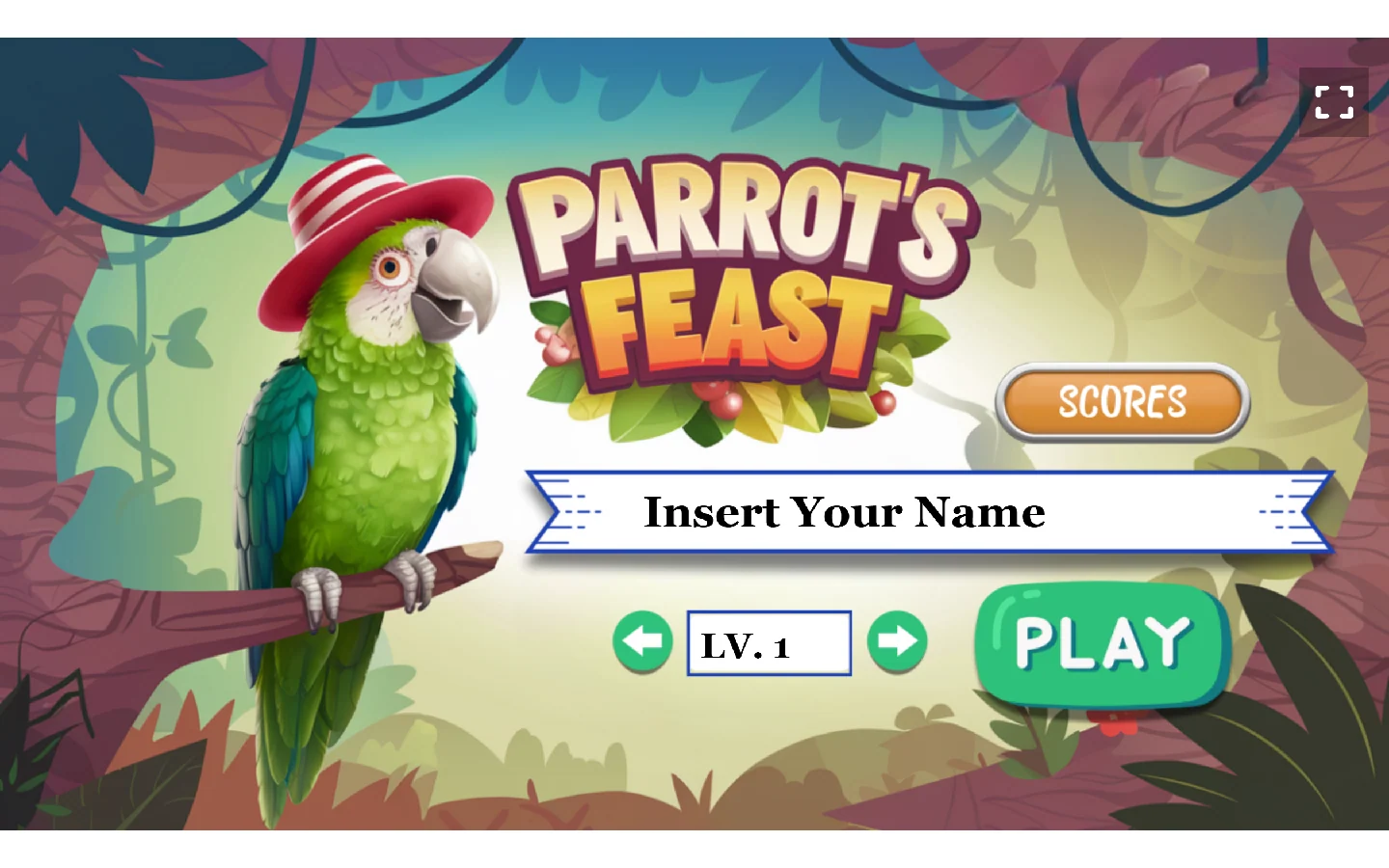
Play can produce serious capability
Experimenting without the weight of a commercial roadmap creates room to test tools, models and techniques more freely. Parrot’s Feast follows this logic: use AI to turn a light idea into complete software that is published and playable.
A small but complete system
Behind a simple interaction sit input handling, movement, collisions, levels, scoring, bonuses, penalties, audio, fullscreen and touch adaptation. Every part requires real decisions and validation of the complete behaviour, just as it would in a larger MVP.
Backgrounds, objects and music were produced with generative tools, while selection, coherence and use remained design decisions. The experiment helps reveal where a model accelerates work, where it introduces inconsistencies and when code or assets need direct intervention.
Develop with assistance, validate directly
GPT-4o supported the writing and evolution of the code. Each proposal was still tested in the browser, corrected and integrated with the other components. This short cycle makes one principle visible: AI can increase speed, while the outcome still needs verification, technical ownership and attention to experience.
Experimentation as Project360 capability
The team moved from concept to a complete release: game structure, JavaScript logic, desktop and touch input, asset pipeline, audio, interface states, testing and static publishing. Its value for Project360 lies in testing an AI-assisted process while retaining creative direction, code control and responsibility for the outcome.
From experiment to real products
The same method can support internal automation, interactive prototypes, learning simulators, configurators, engagement experiences and proof of concepts. Project360 can define the bounded objective, choose where AI truly accelerates work, integrate generated outputs into software, validate the experience and prepare a technical base that can evolve.