Governing mobility as a system
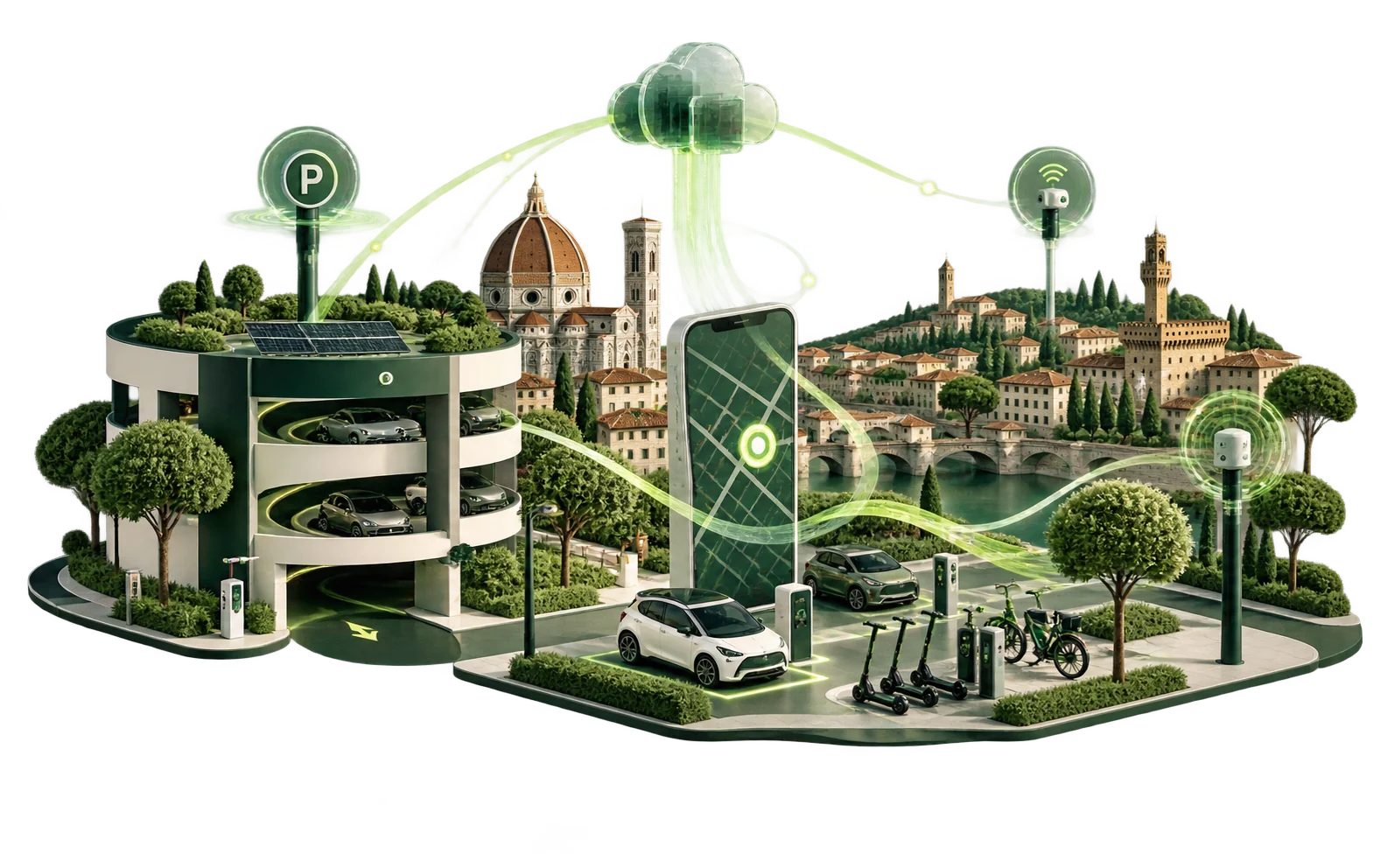
SmartMobility360 explores a cloud platform integrating web, mobile and IoT mobility services. Fragmentation is the starting point: operators, vehicles, events and infrastructure produce different information, while travellers and public bodies need a coordinated view to plan journeys and respond to disruption. The platform is framed as a tool for integrated governance, relating network conditions, demand and available service capacity.
An architecture organised into layers
The programme separates data collection, normalisation and integration from applications and functional systems. The operating layer includes GPS tracking, route planning and mobile interactions; the middle layer covers storage, system integration, business intelligence and back-office functions. This separation supports progressive development while preserving a common information foundation.
Data for scenarios and decisions
Maps, indicators, heatmaps and flow visualisations turn data into analysis tools. Route planning is also conceived as a source of travel intentions. Events and scenarios can therefore guide information, incentives and service capacity, with results observed over time.
Modularity and the investment path
The programme was divided into applications and pilots that could later be combined. This structure associates objectives, dependencies and costs with each phase and helps identify support measures suited to its maturity. Public funding becomes a lever for testing and consolidating distinct modules within the roadmap.
Project360’s contribution
Project360 proposed the modularisation of web, mobile and IoT solutions, contributed to technical-economic planning and identified public-funding instruments for different phases. The work connects platform vision, functional architecture and programme sustainability.
Transferable value
The case demonstrates how complex urban initiatives can be governed through layers, modules and progressive validation. The same method helps when data and services belong to different organisations but must converge into one user experience and decision frame. It provides a practical basis for prioritising pilots, assigning integration responsibilities and learning from each phase before extending the programme.
Funding and project development
SmartMobility360 supported a network of 14 parking operators in Rome. Digitalisation vouchers backed the programme with €200,000 in non-repayable grants, connecting technology modules and investment planning across a shared initiative.