

The context
Connected parking is more than a single sensor. Value appears when the status of each bay becomes reliable information for drivers and, at the same time, an operating tool for those managing spaces, access and services.
This requires an integrated view. The field device needs to fit the urban context, connectivity must carry data consistently and the platform must turn it into usable information. User channels and supervision tools come afterwards: their quality depends on the whole chain.
Different technologies, one decision to shape
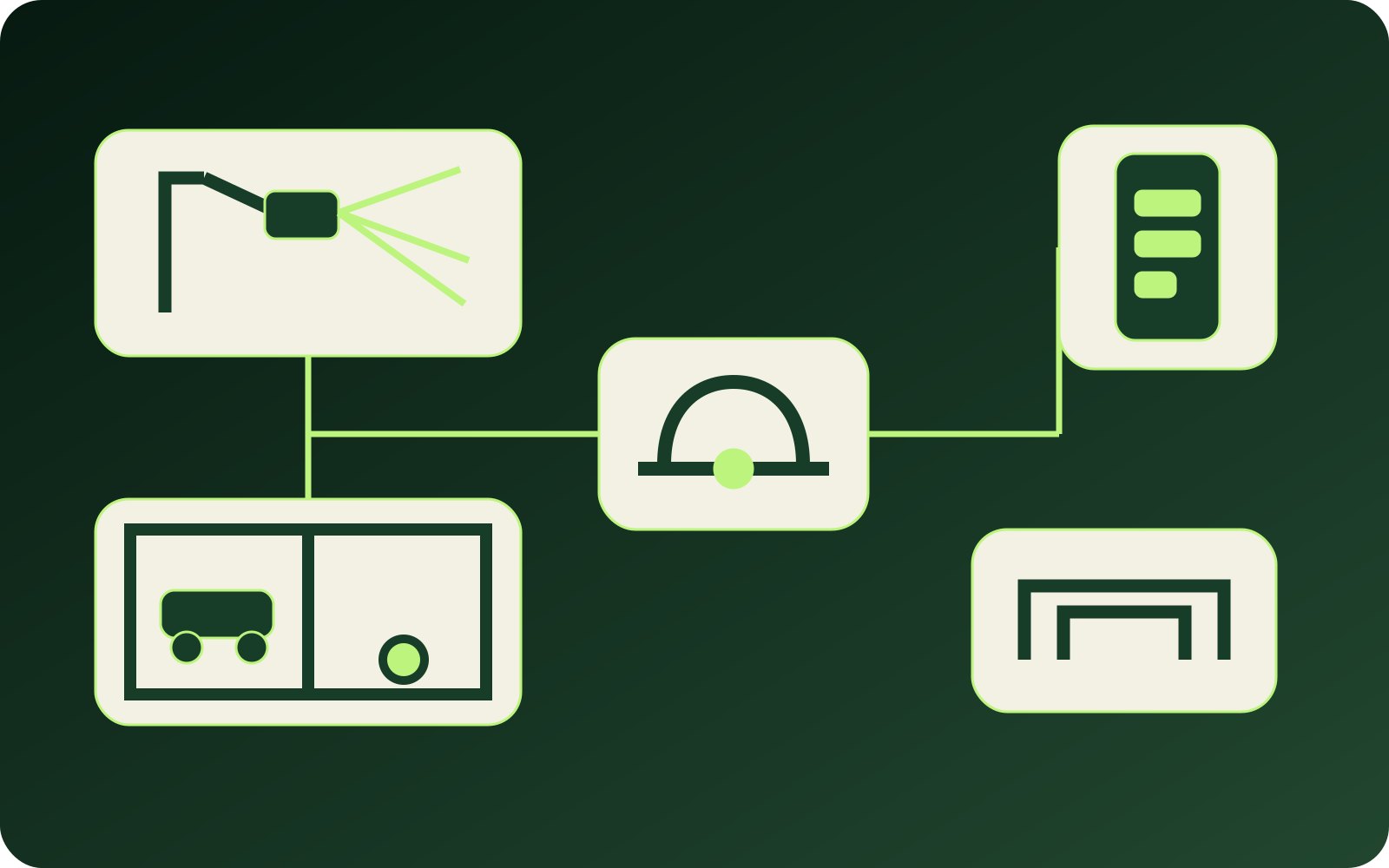
The proposal compared different technology families. Sensors embedded in the parking surface provide point detection. Computer vision can observe wider areas, while introducing different requirements for coverage, processing and image governance. Between these options, edge nodes, the network and cloud services influence response times, maintenance and the system’s capacity to evolve.
The work connected these alternatives to verifiable requirements: the characteristics of the site, expected accuracy, service continuity and integration with digital channels. This makes it possible to assess the architecture in modules and avoids choosing one component before decisions about the complete service are understood.
From proposal to experiment
The path was structured in stages. An initial experiment can test detection and connectivity within a controlled area. The resulting data then supports an assessment of coverage, reliability and operating effort before the system is extended or further user services are activated.
This approach also makes relationships between suppliers easier to manage. Sensors, networking, software and supervision can evolve as coordinated parts with shared review points and clear responsibilities.
Project360 contribution
Project360 contributed to the proposal and preliminary analysis within the bidding group. Cross-functional technology consulting connected requirements, detection options, the data architecture and validation stages, turning a collection of technologies into a concept that partners could use in their work.
Transferable value
The method applies to smart mobility projects where physical infrastructure and digital services need to grow together. Before scaling, the selection criteria need to be explicit, the pilot needs to be meaningful and evidence must support the next decision.