The hospitality context
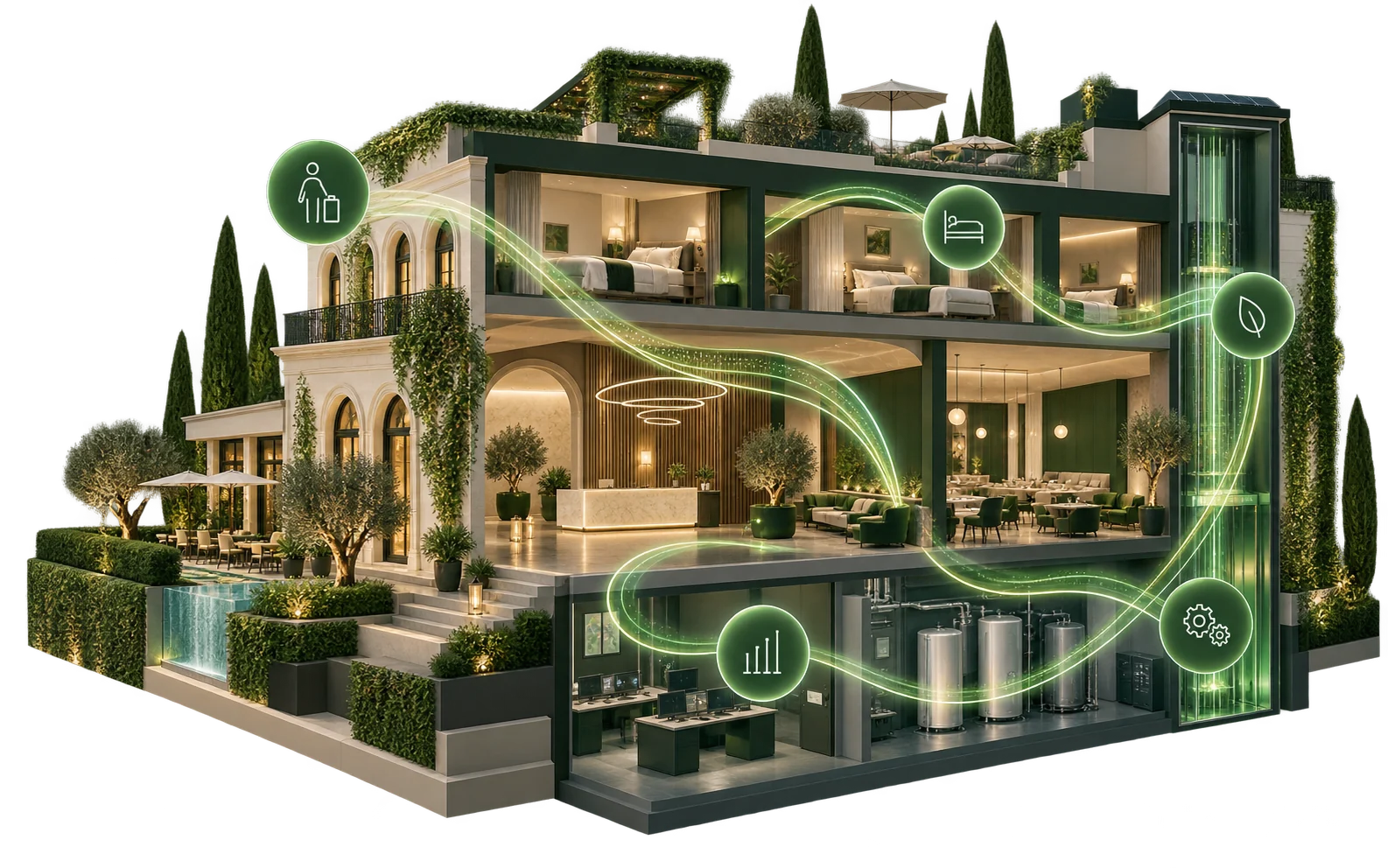
A hotel operates as a continuous system: the building, plant, reservations, front office, rooms and connectivity support the same service experience. These components have different life cycles and specialist teams. Effective innovation therefore requires coordination capable of considering infrastructure, operations and perceived guest quality together.
The programme challenge
The project combined physical and digital work within an existing property. Modernisation could not be treated as a collection of independent purchases: timelines, documentation, supplies and professional activities needed to converge in a framework aligned with operating priorities and the funding programme.
Efficiency and infrastructure
The plant component covered upgrades to heating generation and less-efficient terminal units. The programme also included LED lighting, connectivity and room equipment intended to support comfort and service quality. These interventions were organised into a coordinated plan with priorities, dependencies and documentation aligned with the investment path.
Digital hotel operations
On the operating side, the programme included a cloud PMS supporting reservations, front office, room management, integrations and reporting. The business system belongs in the same view as the infrastructure work: information flow and service reliability also depend on networks, equipment and organisation.
This relationship matters during planning: software adoption, connectivity and room operations need compatible timing, while plant work follows its own professional and commissioning requirements. One programme makes these dependencies explicit.
Project360 contribution and IFIT
Project360 provided cross-functional technology advice, document coordination, management of the IFIT funding application and advisory coordination with the client and suppliers. The programme included specialist professionals and contractors for the design, installation and commissioning of their respective components.
Transferable value
The case shows how to develop a hospitality innovation programme without separating digital operations from the building. Governing different layers as one investment makes dependencies, responsibilities and stages easier to understand and helps connect each intervention to operational continuity and service quality.